Tracer Gas Leak Detection in Longview, TX
When an under-slab leak is too small to hear with acoustic microphones or when plastic PEX piping dampens sonic vibration, tracer gas provides 100% pinpoint accuracy. We inject a safe, non-toxic 5% hydrogen / 95% nitrogen forming gas into isolated lines to sniff out microscopic breaches directly through the slab.
How Gas Sniffing Technology Solves Silent Leaks
Hydrogen is the smallest and lightest molecule in the universe. When mixed at an industry-standard 5% ratio with 95% nitrogen, it forms an inert, completely non-flammable, and non-toxic gas blend called "forming gas."
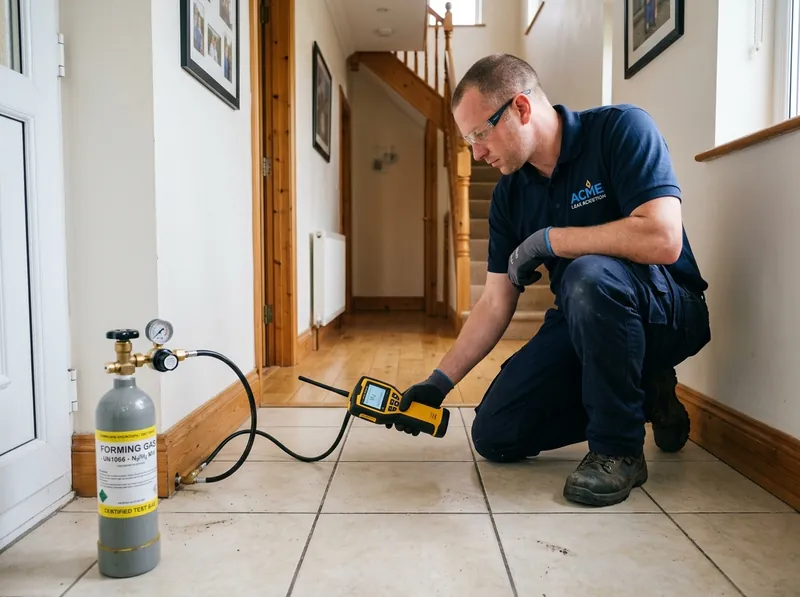
Because hydrogen is lighter than air, escaping gas molecules travel vertically through sub-slab aggregate, porous concrete foundations, and floor coverings, where specialized electronic sensors detect parts-per-million concentrations:
-
Completely Safe for Potable Lines: Forming gas is non-toxic, non-corrosive, non-combustible, and certified safe for residential municipal drinking water plumbing.
-
Highly Sensitive 'Sniffer' Probes: Our calibrated hydrogen gas detectors sense minute concentrations down to 1 ppm, identifying the precise origin point where gas permeates the slab surface.
-
Immune to Ambient Noise: Heavy highway traffic near Loop 281, loud pool pumps, or running commercial machinery won't interfere with tracer gas results, making it ideal in high-noise environments.
Our 4-Step Tracer Gas Testing Procedure
We follow a clean, controlled procedure that protects your plumbing fixtures and isolates the leak location without guesswork across East Texas homes.
Water Evacuation
We shut off the supply valve and gently depressurize the suspected line, evacuating standing water to create room for gas introduction.
Tracer Gas Injection
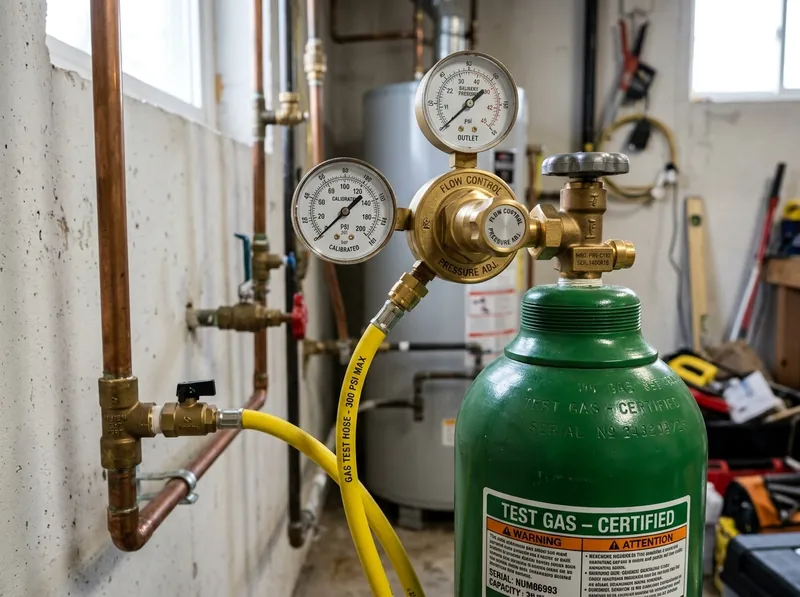
We hook up a regulated gas cylinder and pressurize the pipe with the certified 5/95 hydrogen-nitrogen blend to normal line pressure.
Floor Surface Sniffing
Technicians sweep an electronic hydrogen sensor probe along grout lines, expansion joints, and floor surfaces to register escaping gas.
Pinpoint Confirmation
The sensor displays peak gas concentration at the exact leak origin, giving our repair team accurate coordinates before opening the slab.
When Do Longview Homes Require Tracer Gas Testing?
While acoustic ground microphones solve many leaks, certain structural scenarios make tracer gas the only viable non-destructive diagnostic method:
Plastic PEX & PVC Plumbing
Unlike rigid copper, modern PEX and CPVC pipes absorb sound vibrations. Tracer gas ignores pipe material, escaping through the puncture regardless of acoustic conductivity.
Low-Pressure Micro Pinhole Leaks
Very small pinholes that lose pressure slowly over hours may not generate enough audible hissing for acoustic listening discs, but gas molecules escape effortlessly.
Loud Commercial or Urban Settings
If your home is situated along high-traffic corridors like Gilmer Road, Eastman Road, or near railroad lines, tracer gas provides complete accuracy without acoustic noise interference.
How Tracer Gas Permeates Slab-on-Grade Foundations
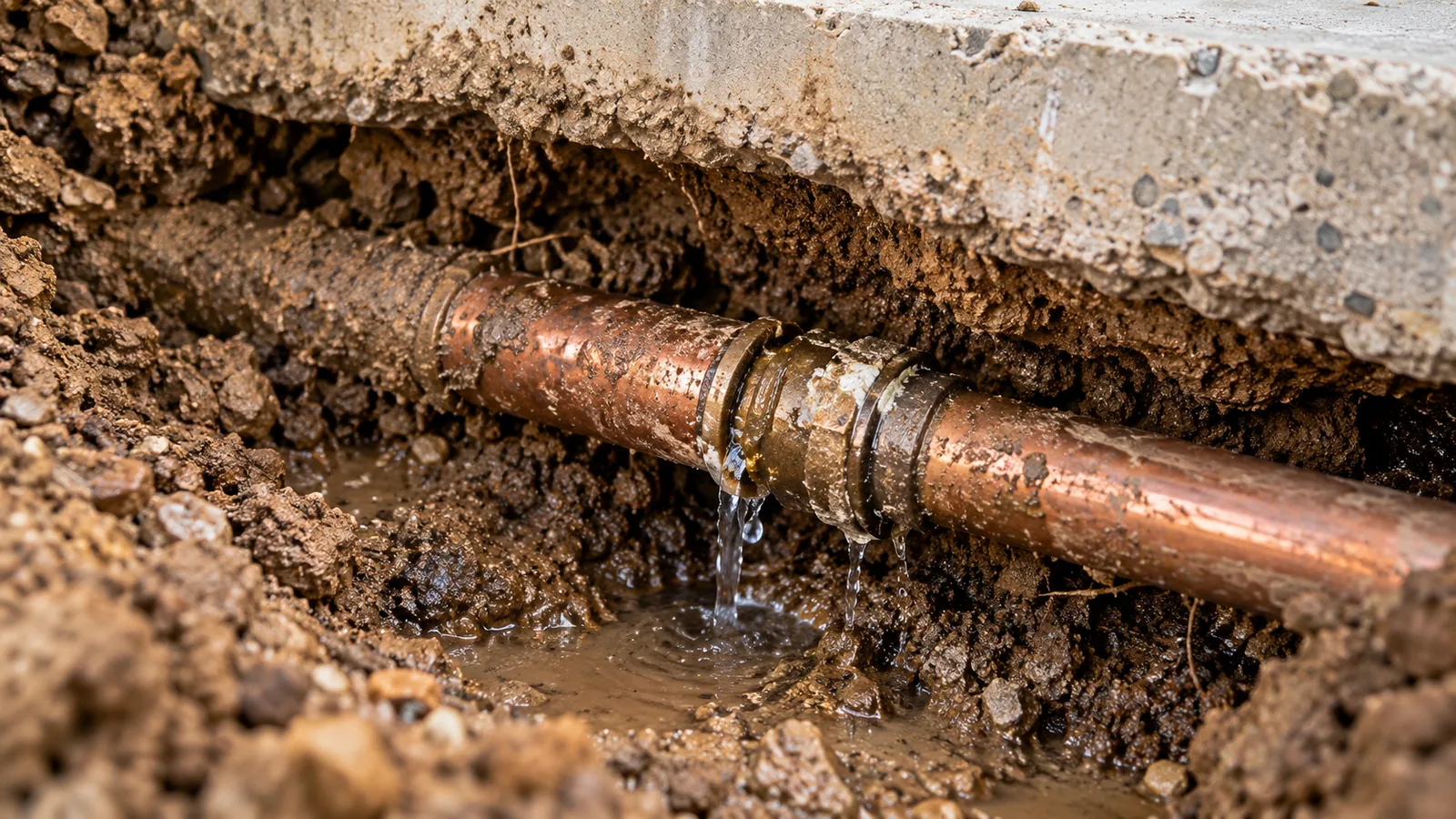
One of the greatest challenges of under-slab leak detection in East Texas is the heavy red clay layer directly below the concrete slab. In standard acoustic testing, thick clay can occasionally absorb sound vibrations, muffling the acoustic hiss of a pressurized waterline leak.
Forming gas (5% hydrogen, 95% nitrogen) operates on molecular physics rather than sound. Because hydrogen is the lightest known gas molecule, it cannot be trapped by dense clay or saturated sub-base gravel. It naturally travels upward along the path of least resistance through microscopic concrete capillaries, expansion joints, and floor seams.
Our specialized hand-held sniffers detect hydrogen concentrations down to 1 part per million (ppm). This molecular approach guarantees that whether your home has copper lines from 1975 or modern PEX lines from 2020, we locate the subterranean leak without invasive exploratory demolition.
Tracer Gas Detection Across All Longview ZIP Codes
Our precision electronic sniffing equipment is deployed daily throughout Gregg and Harrison counties:
Downtown Longview
Quiet historic neighborhoods and multi-level residences.
ZIP: 75604Greggton & West
Subdivisions along Highway 80 and Pine Tree ISD.
ZIP: 75605North Longview
Spring Hill and Judson Road residential foundations.
ZIP: 75603Lakeport & South
Lakeside properties and southern Gregg County corridors.
Seamless In-House Repairs Once Located
Locating the leak is only half the battle. ClearTrace provides single-team accountability with complete in-house pipe restoration:
Targeted Direct Access
With gas pinpointing accurate to within inches, our plumbers open only a minimal slab opening directly over the breach, replacing the damaged fitting cleanly.
Spot repair details →Overhead PEX Rerouting
If the tracer test reveals multiple micro-fractures along an aging line, we bypass the foundation entirely by rerouting fresh lines overhead through attic spaces.
Reroute options →Post-Repair Verification
After completing pipe repairs, we re-test the system with hydrostatic pressure and tracer gas to certify 100% system integrity before closing the floor.
Pressure testing →Dealing with a Silent or Hard-to-Find Slab Leak?
Don't let contractors guess and tear up your foundation. Book advanced tracer gas leak detection with ClearTrace today.
Call (903) 857-1070 to BookFrequently Asked Questions
What gas is used for tracer gas leak detection in Longview TX?
We use a non-toxic, non-flammable forming gas mixture of 95% nitrogen and 5% hydrogen/helium that escapes microscopic pipe pinholes and penetrates concrete floors safely.
When is tracer gas leak detection necessary under concrete?
Tracer gas is used when acoustic sound is muffled by heavy East Texas clay backfill or for small cold water pinhole leaks.